When the payment terminal goes offline mid-transaction without an automatic failover option, the cost isn’t measured in the failed sale alone. It’s measured in the customer who walks out, the staff member who absorbs the frustration, inventory that’s still sitting on the shelf, and the brand reputation that takes a hit before the system is even back online. New research commissioned by FreedomPay and Dynatrace quantifies the toll. US retail and hospitality businesses lose $44.4 billion annually due to payment outages, but the more important story sits underneath the headline. It’s a story about what separates the best-performing merchants from the rest: a performant approach to orchestrating the payments stack through resilience features and real-time visibility.
Cash as the obsolete fallback option
For decades, the unspoken assumption behind payment failures was that cash would catch what digital couldn’t. That assumption is now gone. In today’s environment, cash accounts for just 15% of transactions, down from a third a decade ago. Fewer than 30% of Americans always carry cash, and among millennials and Gen Z, digital payment methods are the default, not a preference. Directing a high-value customer to the nearest ATM when the card reader fails is now unacceptable.
That shift has quietly removed the safety net most merchants used to rely on. And yet 15% of US retail and hospitality businesses still have no secure digital backup, and only about half support offline card processing. The primary payment path has more single points of failure than ever, while the analog fallback has all but disappeared.
Research shows that an outage-consumer tolerance gap heightens the impact outages have on merchants: The average outage lasts two hours, yet consumer tolerance lasts only seven minutes. While IT and Ops teams scramble to solve outages, their customers have already lost patience, and revenue has walked out the door.
Resilience as a performance advantage
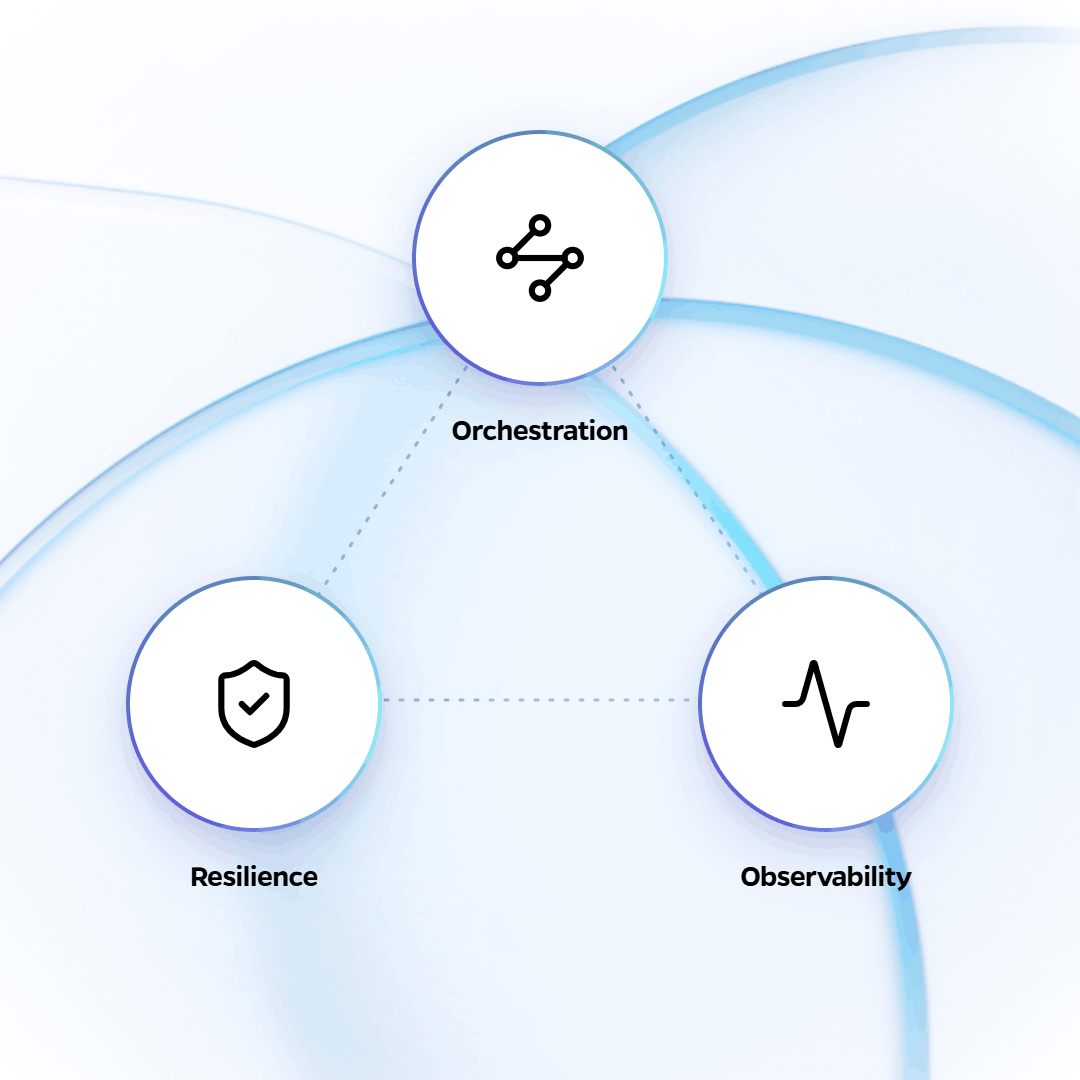
The most successful merchants have stopped treating payment continuity as a contingency plan and started treating it as a competitive advantage. Payment resilience is the architectural commitment that makes it possible: redundant connectivity, on-site power backup, and offline-capable card processing engineered directly into the checkout flow. When a connection drops or an acquirer fails during a Friday rush, transactions keep moving. Merchants who choose solutions with offline capabilities built right into the system at the point of checkout separate from those who remain operational and those who post a “cash only” sign at the door. Resilience is no longer measured on the recovery plan in place. It’s now focused on the automatic failovers that prevent a scramble to diagnose and fix the issue ensuring the employee and guest experience don’t face any disruption.
Orchestration: the intelligence that keeps transactions moving
Resilience gives merchants options. Payment orchestration is what decides which option to use, in real time, on every transaction. A modern orchestration layer routes payments across the optimal path the moment performance shifts — moving between processors, acquirers, and connectivity channels automatically. If a primary acquirer slows, traffic reroutes. If the network drops, the terminal flips to offline mode. The customer experiences a seamless checkout experience— while underneath, the orchestration engine keeps revenue flowing seamlessly.
Observability: the visibility that protects revenue
None of this works without observability. Payment systems don’t fail in isolation. They sit inside a complex ecosystem of terminals, networks, cloud services, and acquirer connections, yet most payments teams lack real-time visibility across that flow. If you want to automate with confidence, you need real-time visibility of the entire payment flow. Observability is what turns a seven-minute customer tolerance window into a seven-minute recovery window. It detects degradation before customers feel it, pinpoints the failing component instantly, and gives orchestration the signal it needs to reroute. Without observability, merchants are flying blind, putting both revenue and reputation at risk.
The board-level question
For CEOs, CIOs, and COOs losing sleep over operational risk, the right question is no longer “what happens if our payments go down?” It’s “what have we built so that when an issue arises, our customers and employees never feel it?” The answer is simple: a robust payment orchestration platform with built-in resilience capabilities and real-time visibility of performance.
The highest-performing businesses aren’t the ones that avoid inevitable disruption. They’re the ones that engineer their payment environments to absorb it invisibly.
When the next outage hits, are your payments able to handle it?